How do I know if the leak damaged what is behind the wall or under the floor?
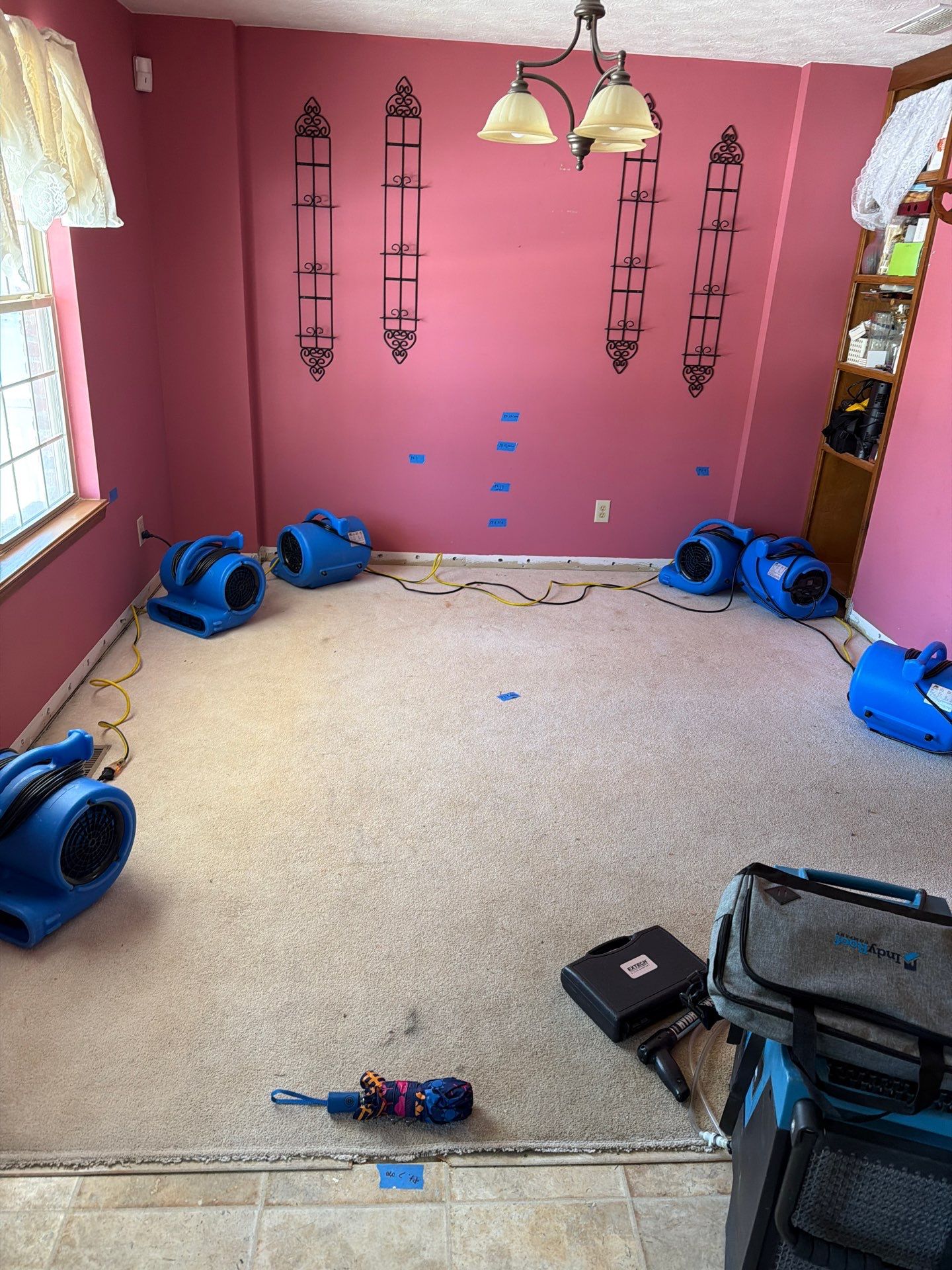
Surface stains lie. A two-inch water spot on drywall can sit above three feet of saturated insulation, wet framing, and a swollen subfloor. The fastest way to know what you are dealing with is a moisture meter reading and a thermal scan, which is the first thing our techs do when we arrive at a Sweet Briar home. We push pinless meters into the drywall at 6, 18, and 36 inches above the floor, then map the moisture pattern. If the reading climbs as we go down, water is pooling at the bottom plate, which means the insulation and sill are wet too.
You can do a rough version yourself. Press firmly on the drywall near the leak. If it gives, the gypsum has lost integrity and needs to come out. If the floor feels spongy or the laminate planks have started cupping at the seams, the subfloor is holding moisture. Smell matters too. A musty odor near a baseboard, even without a visible stain, almost always means moisture has been sitting in the cavity for several days. For a deeper walkthrough of detection methods, our guide on water damage behind walls and hidden leak detection covers exactly what trained techs look for.
What should I do in the first 60 minutes after I find the leak?
Shut the water off at the fixture stop or the main if the fixture valve is stuck. Most Sweet Briar homes have the main near the water meter in the basement or crawl space. Take photos before you move anything, because your insurance adjuster will want to see the original condition. Pull furniture and rugs off the wet area, lift any wet contents off the floor, and open the cabinet or vanity nearest the leak so air can move. Do not punch holes in drywall yet. Your restoration company will do controlled cuts that the insurance carrier will pay for, and random damage can complicate the claim.
If standing water is present, even an inch, professional extraction matters more than fans. A wet/dry shop vac pulls a fraction of what truck-mounted extractors handle, and saturated carpet pad will keep releasing water into the subfloor for days. Our water extraction service page explains how the pros approach standing water removal.
While you wait for the crew, kill power to any outlet or fixture in the wet zone at the breaker panel. Water and electricity in the same wall cavity is a real hazard, especially on lower outlets that may be hidden behind a wet baseboard. Move electronics, books, and anything paper-based to a dry room. Cardboard boxes sitting in a damp area will wick moisture upward and damage contents you assumed were safe.
How much does plumbing leak repair typically cost in Sweet Briar?
For a contained leak in a single room caught early, mitigation usually runs $1,500 to $3,500 in Sweet Briar. That covers extraction, antimicrobial treatment, three to five days of drying equipment, and daily moisture monitoring. Add drywall removal and reinstall, paint, and trim, and full restoration on a small bathroom or laundry room typically lands between $4,000 and $8,500.
Larger losses, like a supply line that ran for several hours on an upper floor and damaged the ceiling below, often range from $9,000 to $20,000 because you are dealing with multiple rooms, ceiling cuts, and possible floor replacement. Most plumbing leak damage is covered by standard homeowners policies as a sudden and accidental loss. Slow, long-term leaks are usually excluded, which is why timing your claim matters.
Should I file an insurance claim or pay out of pocket?
If the total damage looks like it will exceed your deductible by a meaningful margin, file. Document everything: photos, the failed plumbing component (keep it in a bag for the adjuster), and a written timeline of when you discovered the leak. Use sudden and accidental in your description because that is the language carriers use to approve claims.
We work directly with adjusters from State Farm, Allstate, Erie, American Family, and most regional carriers serving Sweet Briar. We provide the moisture readings, drying logs, and itemized estimates the adjuster needs, which speeds approval. If your damage is below your deductible, we will give you a flat cash-pay number and stick to it.
How long does the full repair process take from start to finish?
Mitigation and drying usually take three to five days for a contained leak, sometimes longer if framing or concrete is involved. Reconstruction is the slower phase. Drywall, mud, paint, and trim on a small room run about a week once materials arrive. Flooring replacement adds another three to seven days depending on whether tile, hardwood refinishing, or new planks are involved. Most Sweet Briar homeowners are fully back to normal within two to four weeks. Sweet Briar Water Restoration schedules mitigation and rebuild back to back so you are not waiting on a second contractor to start.
Will the drywall need to be replaced or can it be dried in place?
It depends on three things: how long the drywall was wet, what category of water touched it, and whether insulation is behind it. Clean supply line water (Category 1) caught within 24 to 48 hours can often be dried in place with air movers and a dehumidifier, especially if the wall is uninsulated. Drywall saturated for more than 48 hours, or hit with Category 2 grey water from a dishwasher or washing machine line, almost always needs a flood cut, which is a controlled removal 12 to 24 inches above the visible water line.
Insulated walls are different. Fiberglass batts hold water like a sponge and lose R-value once saturated. Cellulose insulation clumps and never recovers its shape. In both cases we remove the bottom two feet of drywall, pull the wet insulation, dry the cavity with directed airflow for three to five days, then replace insulation and drywall during the repair phase. Plaster walls, common in older Sweet Briar homes, are a different conversation. Plaster itself is durable, but the wood lath behind it swells and the keys break loose. We can often save the plaster face if we dry the cavity fast enough through small access ports drilled near the baseboard.
Can my hardwood, laminate, or tile floor be saved?
Solid hardwood is the most forgiving. If we get to it within 48 hours and pull moisture out aggressively, cupping often relaxes during the drying process, and a light sand and refinish restores the surface. Engineered hardwood is harder to save because the veneer separates from the plywood backing once water gets between layers. Laminate is usually a loss; the fiberboard core swells and never returns to spec.
Tile generally survives, but the issue is what is underneath. If water sat on a wood subfloor under tile for days, the subfloor can warp and crack the grout from below. We use injection drying mats that pull moisture up through the grout lines without removing the tile, which can save thousands compared to a full tear-out. For more detail on wood floors specifically, see our breakdown on hardwood floor water damage and when to save or replace.